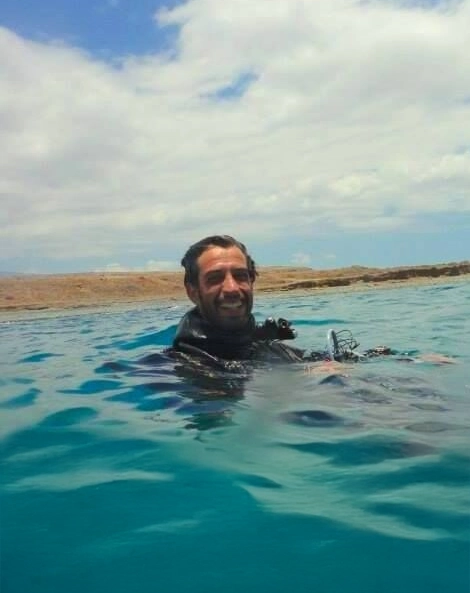
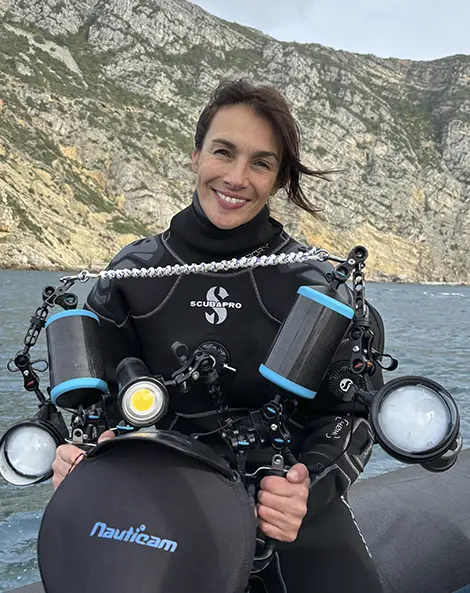
Sylvie Dias is an underwater videographer and photographer. Over the past five years, she has collaborated with several universities like Ispa, MARE and CCMAR on scientific research projects focused on marine biodiversity. Her work began with BiodivAMP (marine protected áreas) and Kids Dive (ocean literacy in schools). Since 2022, she has been documenting the marine forests of the African coast (Mauritania and Bijagós) in support of CCMAR research. In 2023 she recorded marine life along Almada’s riverfront for CalvALMar project, culminating in her first photographic exhibition dedicated to seahorses.
Last year she returned to Mauritania to produce the film for the 50th anniversary of Banc d’Arguin National Park. She is currently filming the CASULO research project (MARE) at Lagoa de Óbidos, and CCMAR projects on restoring corals, seagrass meadows and kelp along the Portuguese coast, for screening at the Marine Forest Festival.